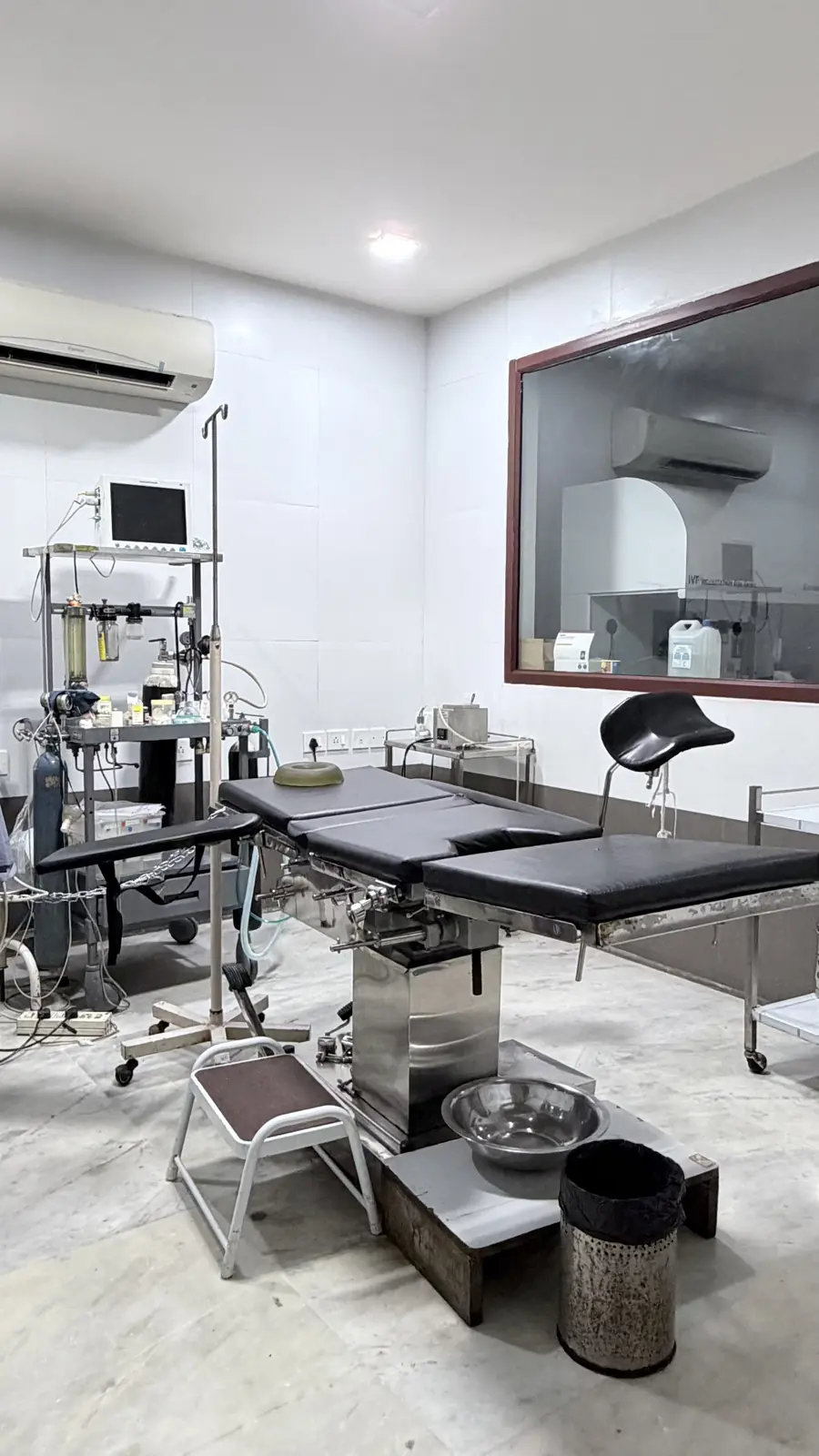
VitrificationRapid freezing used in modern fertility labs
Oocyte cryopreservation
Egg Freezing Treatment at Sehgal IVF Centre
Egg freezing is a fertility-preservation treatment in which a woman's unfertilised eggs are collected, frozen and stored for possible use in the future. When needed, they can be thawed, fertilised using IVF techniques and, if suitable embryos develop, transferred to the uterus.
Medically reviewed by Dr. Ruchi Malhotra, MBBS, MS (Obstetrics & Gynaecology) · Reg. No. 6111 · Last reviewed October 2026
Unfertilised eggs stored
Medical or elective
Individual counselling first
Egg freezing may be considered by women who want to preserve the possibility of having biological children in the future, and by women who may undergo medical treatment that could affect their fertility. At Sehgal IVF Centre, it is considered after an individual fertility assessment and counselling. The number and quality of eggs frozen, and your age when they are frozen, can influence future success. Egg freezing does not guarantee a future pregnancy or birth.
The basics
What is egg freezing?
Egg freezing is a method of preserving unfertilised eggs for possible future use. Egg number and quality normally decline with age. Freezing eggs at a younger age can preserve eggs from that point in time, although it cannot stop the natural ageing of the body or eliminate pregnancy-related risks at a later age.
Many modern fertility laboratories use a rapid freezing technique called vitrification. The frozen eggs are stored at very low temperatures until they are required for treatment.
Now
Fertility assessment
Ovarian stimulation
Egg retrieval
Egg freezing
In between
Storage
Later, when you're ready
Thawing
Fertilisation
Embryo transfer
Who may consider it
Two reasons women freeze their eggs
Medical
Medical fertility preservation
Before medical treatment that could affect ovarian function or future fertility. Examples can include certain:
Cancer treatments
Chemotherapy
Radiation treatments
Medical conditions that may affect ovarian function
Surgical procedures that may affect the ovaries
Fertility-preservation counselling should be provided as early as possible when medically appropriate.
Elective
Elective egg freezing
Some women choose to freeze their eggs because they are not ready to have children now. Reasons may include:
Personal circumstances
Career or educational plans
Not currently being ready for parenthood
Not having a suitable partner
Wanting to preserve reproductive options for the future
Egg freezing is an option for fertility preservation, not a guarantee of future motherhood.
Age+ number of eggs stored
Key predictors used when counselling patients about future outcomes (ASRM)
Timing
Why does age matter in egg freezing?
Both the number and quality of eggs generally decline with increasing age, so the age at which eggs are frozen can influence their potential future use. ASRM guidance notes that age at vitrification and the number of eggs stored are important predictors when counselling patients about future outcomes.
This does not mean there is one specific age at which every woman should freeze her eggs. The decision depends on:
Age
Ovarian reserve
Medical history
Family-building plans
Planned fertility-affecting treatment
How many eggs may be obtained
Personal preferences
Financial considerations
A fertility specialist can discuss your individual situation rather than relying on a general age-based recommendation.
Step by step
Egg freezing treatment process
Select a step to see what happens at each stage.
Step 1 of 8
Fertility consultation
The first step is a consultation with a fertility specialist. Your doctor may discuss:
Your age
Menstrual history
Medical history
Previous surgeries
Previous fertility treatment
Family-building plans
Medications
Planned treatment that could affect fertility
The doctor may also discuss ovarian reserve testing and other investigations.
Step 2 of 8
Ovarian reserve assessment
Tests may be performed to understand how the ovaries may respond to stimulation. Depending on your situation, assessment may include:
Ultrasound examination
Antral follicle count
AMH testing
Other hormone tests when appropriate
These tests provide useful information, but they cannot precisely predict whether you will have a baby from frozen eggs. Results are used alongside your age and medical history to develop an appropriate plan.
Step 3 of 8
Ovarian stimulation
In a natural cycle, usually one egg becomes dominant and is released. For egg freezing, fertility medicines stimulate the ovaries so that multiple follicles can develop in one treatment cycle.
The response is monitored with ultrasound and, when required, blood tests. Medication doses may be adjusted depending on your response.
Modern fertility-preservation protocols can sometimes begin stimulation without waiting for a particular point in the menstrual cycle when there is a medical reason to start quickly.
Step 4 of 8
Egg maturation
When the follicles have developed sufficiently, medication is given to help the eggs complete their final stage of maturation.
The timing of this medication is important because egg retrieval is scheduled according to the expected stage of egg development. Your fertility team will give you detailed instructions about medication and timing.
Step 5 of 8
Egg retrieval
Egg retrieval collects mature eggs from the ovaries. It is usually performed under ultrasound guidance with appropriate pain relief or sedation.
A thin needle is passed through the vaginal wall toward the ovarian follicles, and fluid containing eggs is collected. The procedure generally takes a short time, although experiences vary. The eggs are immediately taken to the embryology laboratory for assessment.
Step 6 of 8
Egg assessment
The embryology team examines the collected eggs under specialised laboratory conditions.
Not every follicle contains an egg, and not every collected egg will be mature enough to freeze. Only suitable mature eggs are selected for cryopreservation.
This is why the number of eggs retrieved and the number of eggs ultimately frozen can be different.
Step 7 of 8
Egg freezing
Suitable mature eggs are prepared using a cryoprotective solution and frozen using a specialised cryopreservation technique.
Vitrification, a rapid-freezing method, is widely used for egg cryopreservation and has improved the ability to preserve mature eggs compared with older slow-freezing approaches. The frozen eggs are then stored in specialised cryogenic storage systems.
Step 8 of 8
Long-term egg storage
Frozen eggs can remain in storage for future use, subject to applicable laws, regulations, consent requirements and the centre's policies. Before freezing, you should receive clear information about:
Storage arrangements
Storage fees
Consent requirements
Future use of the eggs
If eggs are no longer required
If circumstances change
Keep your contact details updated with the centre so that important consent and storage communications can reach you.
Personalised information
Thinking about freezing your eggs?
Get personalised information about your ovarian reserve and your potential response to egg freezing, so you can make an informed decision about your future.
When you decide to use your frozen eggs, they are carefully thawed in the laboratory. Not every frozen egg will necessarily survive the thawing process.
Eggs that survive and are suitable for treatment are fertilised using sperm. Because freezing changes the outer layer of the egg, ICSI is commonly used to fertilise thawed eggs.
The resulting embryos are cultured in the laboratory. If an embryo develops appropriately, it may be selected for transfer into the uterus according to the treatment plan.
Does egg freezing guarantee a baby?
No. Several stages must each be successful:
Egg collection
Egg survival after thawing
Fertilisation
Embryo development
Embryo transfer
Implantation
Pregnancy
Live birth
Illustration only: each stage depends on the one before it.
Outcomes
What affects your future chances
Age when eggs were frozen
Number of mature eggs frozen
Egg quality
Survival after thawing
Fertilisation
Embryo development
Uterine and reproductive health
Age and health when eggs are used
Sperm factors
Current HFEA data highlights that the number of patients returning to use their frozen eggs remains relatively small, so success-rate estimates need to be interpreted carefully.
Planning
How many eggs should be frozen?
There is no single number of eggs that guarantees a future baby. The number obtained depends on:
Age
Ovarian reserve
Response to fertility medicines
Previous ovarian stimulation
Medical history
Some women obtain more eggs in one cycle, others fewer. ASRM recommends counselling based on age at freezing and the number of oocytes cryopreserved, using clinic-specific information where available.
Your specialist can discuss whether one or more cycles may suit your family-building plans.
Realistic expectations
What egg freezing can and cannot do
✓Benefits
Preserves unfertilised eggs
Eggs are stored without fertilising them at the time of collection.
Future choice of sperm source
Because eggs are unfertilised, the sperm source can be decided later, an advantage identified by ASRM.
Preservation before medical treatment
An established option for women expected to undergo treatment that may affect fertility.
An additional reproductive option
For women not ready to attempt pregnancy at the present time.
✕Limitations: egg freezing does not
Guarantee pregnancy
Guarantee a live birth
Preserve fertility indefinitely in every individual
Stop the natural ageing of the body
Eliminate pregnancy risks associated with older maternal age
Guarantee that enough eggs will be collected
Guarantee that all frozen eggs will survive thawing
Guarantee fertilisation or healthy embryo development
It should be discussed as a fertility-preservation option rather than an insurance policy for future pregnancy.
Safety
Is egg freezing safe?
Egg freezing involves ovarian stimulation and an egg-retrieval procedure, so it has potential risks. Your doctor should explain the risks relevant to your medical situation before treatment.
01
Side effects from fertility medicines
Some women may experience:
Bloating
Abdominal discomfort
Headache
Mood changes
Breast tenderness
Injection-site discomfort
02
Ovarian hyperstimulation syndrome
OHSS can occur when the ovaries respond too strongly to stimulation. Symptoms range from mild discomfort to more serious complications. Modern stimulation and monitoring strategies reduce the risk, but OHSS remains an important potential complication.
03
Egg retrieval risks
Egg retrieval is generally considered a routine fertility procedure, but potential complications can include bleeding, infection or injury to surrounding structures.
One part of fertility planning.Not a guarantee that pregnancy will be possible later.
Looking ahead
Egg freezing and future pregnancy
Freezing eggs at a younger age may preserve eggs before age-related changes in egg quality occur.
However, using frozen eggs in the future does not remove all pregnancy-related risks associated with the age at which pregnancy occurs. For example, pregnancy at an older age may carry increased risks for the mother and baby.
Egg freezing should therefore be considered as one part of fertility planning rather than a guarantee that pregnancy will be possible later.
Comparison
Egg freezing vs embryo freezing
Both can be used for fertility preservation, but they are different.
Egg freezing
Embryo freezing
Unfertilised eggs are frozen
Fertilised eggs that have developed into embryos are frozen
No sperm is required at the time of freezing
Sperm is required for fertilisation
Future sperm source can be chosen later
Sperm source is already involved in embryo creation
Greater control over future use of the unfertilised eggs
Embryo storage involves decisions and consent relating to the embryo
May suit women who want to preserve unfertilised eggs
May be considered when a patient is ready to create embryos
The appropriate option depends on your circumstances, reproductive plans and preferences. A fertility specialist can explain the benefits and limitations of both.
Facing medical treatment?
Egg freezing for cancer or medical treatment
If your planned treatment may affect your fertility, speak with a fertility specialist as early as possible. Some medical treatments can damage ovarian function. For appropriate postpubertal patients, mature egg freezing is an established fertility-preservation technique, and treatment may sometimes need to start quickly.
Where appropriate, your fertility specialist can coordinate with your treating medical team so that fertility preservation does not unnecessarily delay essential medical treatment.
How many eggs might I reasonably expect to freeze?
What does my ovarian reserve indicate?
How does my age affect the expected outcome?
Could I need more than one cycle?
What are the possible risks of ovarian stimulation?
What is the complete treatment cost?
What are the annual storage costs?
What happens when I decide to use the eggs?
How are frozen eggs thawed and fertilised?
What are the clinic's age-specific outcomes?
What happens if I do not use my frozen eggs?
What consent is required for storage and future use?
Why choose us
Why choose Sehgal IVF Centre for egg freezing?
Consider the fertility team's experience, embryology laboratory, cryopreservation methods, storage systems, counselling and transparency about outcomes and costs. Our egg-freezing journey focuses on:
Individual fertility assessmentYour age, ovarian reserve, medical history and reproductive plans are considered before treatment.
Personalised treatment planningStimulation protocols are adjusted according to your individual response.
Careful egg retrievalPerformed using appropriate medical and monitoring procedures.
Embryology laboratory expertiseSpecialised equipment, trained embryologists and proper cryopreservation procedures.
Secure cryostorageControlled cryogenic storage with identification and monitoring systems.
Clear counsellingBenefits, limitations, risks, costs and the future treatment process explained before you decide.
Is it time to talk?
When should you consider an egg-freezing consultation?
There is no single recommendation that applies to every woman. Consider speaking with a fertility specialist if:
01You are considering delaying pregnancy and want to understand fertility-preservation options
02You are planning medical treatment that may affect your fertility
03You have concerns about declining ovarian reserve
04You want to understand your options before making family-planning decisions
05You want personalised information about your ovarian reserve and potential response
Egg freezing, or oocyte cryopreservation, is a fertility-preservation procedure in which mature unfertilised eggs are collected, frozen and stored for possible future use.
Why do women freeze their eggs?
Some women freeze their eggs before medical treatment that may affect fertility. Others may choose egg freezing because they are not currently ready to have children and want to preserve an additional reproductive option for the future.
Does egg freezing guarantee pregnancy?
No. Egg freezing does not guarantee pregnancy or a live birth. The outcome depends on several factors, particularly the woman's age when the eggs are frozen and the number of mature eggs stored.
Does egg freezing affect egg quality?
The purpose of egg freezing is to preserve the eggs at the time they are frozen. However, not every egg will survive thawing, fertilise or develop into an embryo.
At what age should I freeze my eggs?
There is no single age that is right for everyone. Egg quality generally declines with age, so the age at freezing is an important factor when discussing expected outcomes. Your fertility specialist can assess your individual circumstances.
How many eggs should I freeze?
There is no guaranteed number. The number of eggs obtained depends on age, ovarian reserve and response to stimulation. Your specialist can discuss an appropriate treatment strategy based on your individual situation.
Is egg freezing painful?
The ovarian stimulation stage involves injections, which may cause temporary discomfort. Egg retrieval is performed with appropriate pain relief or sedation. Individual experiences vary.
How are frozen eggs used later?
The eggs are thawed in the laboratory. Suitable eggs are generally fertilised using ICSI, and embryos that develop appropriately may subsequently be considered for transfer into the uterus.
How long can frozen eggs be stored?
Storage periods and consent requirements depend on the applicable laws, regulations and clinic policies. Your fertility centre should explain the current requirements before treatment.
Can I freeze eggs if I am having cancer treatment?
Egg freezing may be an established fertility-preservation option for appropriate patients before fertility-affecting medical treatment. Because medical treatment can sometimes need to start quickly, early discussion with a fertility specialist is important.
What happens if I never use my frozen eggs?
You should discuss your options and consent arrangements with your fertility centre before freezing. Depending on applicable laws and your consent, options may include continued storage, disposal or other permitted uses.
Is egg freezing better than embryo freezing?
Neither option is automatically better for everyone. Egg freezing preserves unfertilised eggs, while embryo freezing creates and stores embryos. The appropriate choice depends on your circumstances, reproductive plans and preferences.
Preserve your options, with realistic expectations
Egg freezing can provide an additional option for women who want to preserve their reproductive choices or who may be facing medical treatment that could affect fertility. However, egg freezing is not a guarantee of future pregnancy or a baby. The age at which eggs are frozen, the number of mature eggs obtained and several later stages of treatment can influence the outcome.
At Sehgal IVF Centre, you can discuss your fertility goals, ovarian reserve, medical history and fertility-preservation options with a qualified fertility specialist.
Medical disclaimer: This page is intended for general educational information. It does not replace an individual consultation, diagnosis or treatment plan from a qualified fertility specialist.


 Medical