
Very low sperm count
When the number of sperm available is very low, ICSI may help by allowing the embryologist to use an individual sperm for injection.
Intracytoplasmic Sperm Injection (ICSI) is a specialised laboratory technique used as part of an IVF treatment cycle. A single sperm is carefully injected directly into the cytoplasm of a mature egg to help achieve fertilisation.
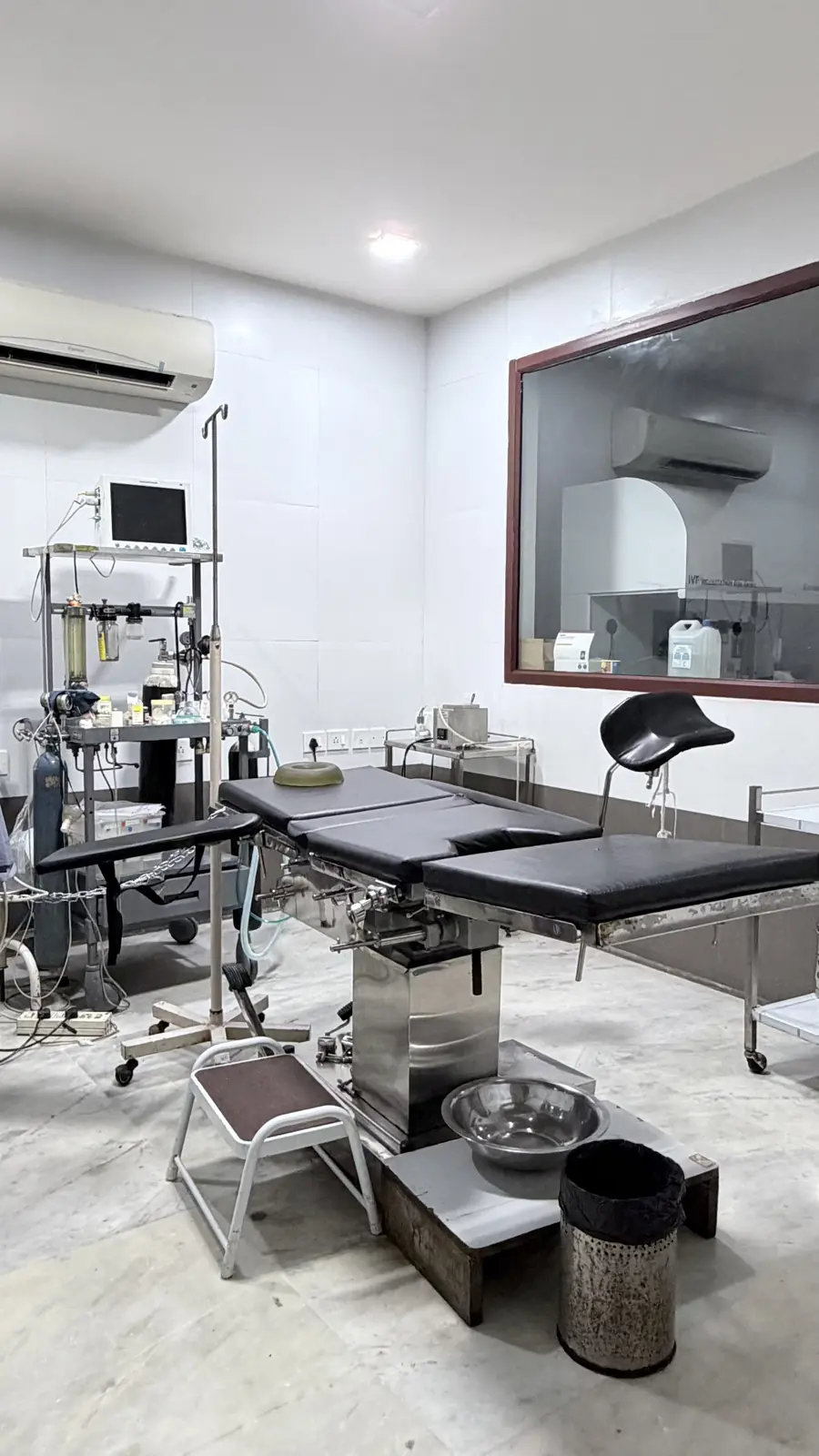
ICSI is particularly useful in certain cases of male-factor infertility, especially when sperm count, movement or other semen characteristics may make conventional fertilisation more difficult. It may also be considered when fertilisation was low or unsuccessful during a previous IVF cycle.
At Sehgal IVF Centre, the decision to use ICSI is based on your fertility history, semen analysis, previous treatment outcomes and other clinical factors. ICSI is not automatically required for every IVF patient.
ICSI stands for Intracytoplasmic Sperm Injection. Unlike conventional IVF, where prepared sperm are placed together with an egg and fertilisation occurs without direct injection, in ICSI the embryologist selects a single sperm and injects it directly into a mature egg. The basic process is:
ICSI is performed in an IVF laboratory by trained embryology professionals using specialised equipment.
The main purpose of ICSI is to help overcome difficulties with fertilisation. Your fertility specialist may discuss ICSI when there is:
ICSI is not suitable or necessary for every patient. Current evidence does not support routine ICSI for all IVF patients when there is no male-factor infertility or previous fertilisation problem.

Male-factor infertility can contribute to difficulty conceiving. Problems may involve the number of sperm, their movement, or other characteristics.
When sperm have difficulty fertilising an egg naturally or through conventional IVF, ICSI provides a laboratory method in which one sperm is injected directly into the egg.
Your doctor may recommend semen analysis and other investigations before deciding whether ICSI is appropriate. The treatment decision considers the complete clinical picture rather than one semen-analysis result alone.
Learn about male infertility treatmentICSI is carried out within an IVF cycle. Here is what typically happens at each stage.
Before treatment, your fertility specialist reviews your medical history and previous fertility treatment. Depending on your circumstances, assessment may include:
The purpose is to understand the likely cause of infertility and select an appropriate treatment approach.
For an IVF-ICSI cycle, medicines may be prescribed to stimulate the ovaries to develop multiple follicles. The response is monitored using ultrasound examinations and, when appropriate, blood tests.
Medication and treatment protocols can vary between patients. ESHRE's current ovarian-stimulation guidance emphasises individualising treatment and monitoring the ovarian response.
When the follicles have reached an appropriate stage, medication is given to help finalise egg maturation. The eggs are then collected from the ovaries using a needle under ultrasound guidance.
The procedure is generally performed with appropriate pain relief or sedation according to the clinic's protocol.
A sperm sample is usually collected on the day of egg retrieval, although the exact approach depends on your circumstances. If sperm cannot be obtained through ejaculation or there is a specific medical reason, sperm may sometimes be retrieved using a procedure.
The embryology team prepares the sperm sample for the ICSI procedure.
Under a microscope, the embryologist identifies an individual sperm suitable for injection. The selected sperm is prepared using specialised laboratory techniques.
ICSI requires precision because the sperm must be carefully introduced into the egg.
The embryologist holds the mature egg in position using specialised laboratory equipment. A very fine injection pipette is used to introduce one sperm directly into the egg's cytoplasm.
The procedure is performed in the IVF laboratory and requires specialised training and equipment.
After ICSI, the eggs are monitored to determine whether fertilisation has occurred. Not every injected egg will fertilise. Similarly, not every fertilised egg will continue developing into an embryo suitable for transfer or freezing.
ICSI helps with the fertilisation step, but it cannot guarantee embryo development, implantation or pregnancy.
If fertilisation occurs, the resulting embryos are monitored in the laboratory. Embryologists assess embryo development according to established laboratory procedures.
Depending on the treatment plan, an embryo may be transferred into the uterus or suitable embryos may be frozen for possible future use.
When an embryo is selected for transfer, it is placed inside the uterus using a thin catheter.
The number of embryos transferred is determined according to your individual circumstances and appropriate clinical guidance. ESHRE has specific guidance on embryo-transfer decisions in IVF/ICSI treatment.
Your doctor can explain whether conventional IVF, ICSI or another treatment suits you after reviewing your medical and reproductive history.
ICSI may be considered for patients with certain fertility problems, particularly male-factor infertility. Examples include:
When the number of sperm available is very low, ICSI may help by allowing the embryologist to use an individual sperm for injection.
When a significant proportion of sperm have difficulty moving properly, conventional fertilisation may be more challenging.
If very few or no eggs fertilised during an earlier IVF cycle, ICSI may be considered in a subsequent cycle. ASRM's 2026 committee opinion identifies previous poor or failed fertilisation as a situation where ICSI can increase fertilisation rates.
In some patients, sperm may need to be obtained through a surgical sperm-retrieval procedure. ICSI may be used because only a limited number of sperm may be available.
ICSI may be appropriate in certain situations involving embryo genetic testing, depending on the type of testing and laboratory protocol. The reason for using ICSI should be explained before treatment.
Both IVF and ICSI are assisted reproductive techniques performed in an IVF laboratory, but the fertilisation method is different.
The choice between conventional IVF and ICSI is made after reviewing your individual fertility factors. ICSI is not automatically more effective than conventional IVF for every patient. Read about IVF treatment
ICSI is primarily intended to address the fertilisation step. It does not guarantee:
For patients with male-factor infertility or previous fertilisation failure, ICSI can be useful in improving the likelihood of fertilisation. However, current evidence does not show that routinely using ICSI for patients without a relevant indication improves live-birth outcomes.
The expected outcome of treatment depends on many factors, including age, egg quality, sperm factors, embryo development, reproductive health and the underlying cause of infertility.
ICSI is an established laboratory technique used as part of assisted reproductive treatment. However, no medical procedure is completely without risk. Potential considerations include:
Your fertility specialist will explain the potential benefits, limitations and risks relevant to your individual situation before treatment, so you can decide with confidence.
The main potential advantage of ICSI is that it allows the embryologist to directly introduce a selected sperm into a mature egg. It is important to have realistic expectations too.
Benefits depend on the individual clinical situation. ICSI should be recommended when there is a reasonable medical indication, not simply because it is a more advanced laboratory technique.
ASRM's 2026 guidance states that routine ICSI is not recommended for patients without male-factor infertility or previous fertilisation failure.
ICSI is generally performed as part of an IVF treatment cycle. The treatment may include:
The exact treatment plan depends on your diagnosis, age, reproductive history, sperm parameters, ovarian response and previous treatment outcomes.
Choosing a fertility centre involves more than selecting a treatment name. Consider the fertility specialists, embryology team, laboratory practices, communication, treatment planning and patient support. Our ICSI approach focuses on:
Your plan is based on your fertility assessment rather than a standard protocol for every patient.
A fertility specialist helps identify the possible cause of infertility and explains whether ICSI is appropriate.
ICSI requires trained embryology professionals and appropriate micromanipulation equipment.
Quality-control systems, identification procedures and safe handling of eggs, sperm and embryos, in line with ESHRE laboratory guidance.
You'll understand why ICSI has been recommended, what it involves and what outcomes can realistically be expected.
Fertility treatment can be emotionally demanding. Clear communication and psychosocial support are part of our care.
Consider speaking with a qualified fertility specialist if you are experiencing difficulty conceiving, particularly when there is a known or suspected sperm-related fertility problem or when previous IVF resulted in poor or absent fertilisation.
An initial consultation can help determine whether conventional IVF, ICSI, IUI, medication, surgery or another fertility treatment may be appropriate.
ICSI stands for Intracytoplasmic Sperm Injection. It is a laboratory technique in which a single sperm is injected directly into a mature egg.
No. ICSI is a fertilisation technique that is usually performed as part of an IVF treatment cycle. In conventional IVF, sperm and eggs are placed together in the laboratory. With ICSI, one sperm is directly injected into the egg.
ICSI is particularly considered for certain male-factor infertility cases and for patients who have experienced poor or failed fertilisation during a previous IVF cycle. It is not routinely required for every IVF patient.
No. ICSI can help overcome certain fertilisation difficulties, but not every injected egg will fertilise.
No. ICSI addresses the fertilisation stage and does not guarantee embryo implantation, pregnancy or live birth.
The ICSI procedure itself is performed on the egg in the IVF laboratory, so the patient does not feel the sperm injection. The patient may experience discomfort associated with other parts of the IVF cycle, such as ovarian stimulation and egg retrieval.
ICSI is performed during the laboratory stage of an IVF cycle. The overall treatment timeline depends on the ovarian-stimulation protocol, egg retrieval, embryo development and embryo-transfer plan.
ICSI may be considered when sperm numbers are very low. In some situations, sperm may also need to be obtained through a sperm-retrieval procedure.
If fertilisation does not occur or embryo development is not as expected, your fertility specialist can review the treatment cycle and discuss possible next steps.
Neither treatment is automatically better for every patient. The appropriate method depends on the cause of infertility and individual clinical circumstances. Current ASRM guidance does not recommend routine ICSI for patients without male-factor infertility or previous fertilisation failure.
ICSI can be an important treatment option for selected patients, particularly when male-factor infertility or previous fertilisation problems make conventional IVF less suitable. Choosing ICSI should be based on a proper fertility assessment and discussion with a qualified fertility specialist.
At Sehgal IVF Centre, you can discuss your fertility history, test results and treatment options with a fertility specialist to understand whether ICSI may be appropriate for you.

Dr. Ruchi Malhotra, MBBS, MS (Obstetrics & Gynaecology)
Gynaecologist & fertility specialist at Sehgal IVF Centre · Reg. No. 6111 · Last reviewed October 2026