
Personalised fertility assessment
Your treatment plan begins with understanding your fertility history and relevant medical factors.
In vitro fertilisation (IVF) is an assisted reproductive treatment that helps couples and individuals who are having difficulty conceiving. Eggs are collected from the ovaries, fertilised with sperm in a laboratory, and the resulting embryo is transferred into the uterus with the aim of achieving pregnancy.

At Sehgal IVF Centre, IVF treatment is planned according to your medical history, fertility test results, age, ovarian reserve, sperm parameters and previous treatment history. Our approach is to first understand the possible cause of infertility and then recommend the treatment that is appropriate for your individual situation.
IVF is not the same for everyone. Some patients may need one cycle, while others may require additional treatment or a different fertility approach. Your fertility specialist will explain the available options, expected outcomes, possible risks and treatment costs before you begin.
IVF stands for In Vitro Fertilisation. "In vitro" means that fertilisation takes place outside the body in a specialised laboratory. A typical IVF treatment involves:
The exact medicines, monitoring schedule and treatment protocol can vary from one patient to another. A complete IVF cycle commonly takes several weeks, although the exact duration depends on the treatment protocol and individual response.
IVF may be considered when pregnancy has not occurred naturally or when other fertility treatments are unlikely to be suitable or have not worked. Your doctor may discuss IVF in situations such as:
Not every person with infertility needs IVF. A fertility evaluation helps determine which treatment is most appropriate. It may include medical and reproductive history, hormone testing, ultrasound, assessment of the uterus and fallopian tubes, and semen analysis, depending on the individual case.
Here is what typically happens during an IVF cycle. Your fertility team will guide you through each stage.
Before starting IVF, your fertility specialist reviews your medical and reproductive history. Depending on your situation, investigations may include:
The purpose is to understand the factors that may be affecting fertility and develop an appropriate treatment plan.
During a natural menstrual cycle, usually one egg matures. IVF medicines may be prescribed to stimulate the ovaries so that multiple follicles can develop.
The response to medication is monitored through ultrasound examinations and, when required, blood tests. Medication doses may be adjusted depending on how your ovaries respond. Close monitoring is important because fertility medicines can sometimes cause excessive ovarian response.
When the follicles have reached an appropriate stage of development, medication is given to help finalise egg maturation.
The eggs are then collected from the ovaries using a thin needle, usually under ultrasound guidance and with appropriate pain relief or sedation. The procedure is generally completed within a short period, although individual experiences can vary.
A sperm sample is collected from the male partner, or donor sperm may be used where medically and legally appropriate. In the IVF laboratory, the eggs are combined with sperm to allow fertilisation.
In selected cases, ICSI (Intracytoplasmic Sperm Injection) may be considered. In ICSI, a single sperm is injected directly into an egg. Whether ICSI is appropriate depends on factors such as sperm characteristics and previous fertilisation results.
After fertilisation, embryos are carefully monitored in the laboratory as they develop.
Not every egg will fertilise, and not every fertilised egg will continue developing into an embryo suitable for transfer. This is a normal part of human reproduction and IVF treatment. Depending on the treatment plan, an embryo may be transferred during the same cycle or embryos may be frozen for possible use in a future cycle.
Embryo transfer involves placing a selected embryo into the uterus using a thin, flexible catheter. The procedure is generally less invasive than egg retrieval and usually does not require surgery.
Your fertility specialist will discuss the number of embryos to transfer based on your individual circumstances. Transferring a single embryo is commonly recommended in appropriate situations because multiple pregnancy can increase risks for both the mother and babies.
After embryo transfer, you will be given instructions about when to take a pregnancy test. Testing too early can give an unclear or misleading result, so it is important to follow the date recommended by your fertility team.
If the test is positive, further follow-up and ultrasound examinations are generally arranged to assess the pregnancy.
IVF does not guarantee pregnancy or a live birth. The chance of success varies from person to person and can depend on several factors, including:
IVF is an established medical treatment, but like any medical procedure, it has potential risks. Possible risks can include:
OHSS can occur when the ovaries respond too strongly to fertility medicines. Monitoring during ovarian stimulation helps the medical team identify excessive ovarian response and modify treatment when necessary.
Your doctor should explain the benefits, alternatives and potential risks of your recommended treatment before you provide consent.
IVF can involve physical, emotional and financial considerations. You may have several appointments for monitoring, investigations and treatment procedures. It is normal to have questions about:
At Sehgal IVF Centre, your treatment plan is discussed with you clearly so that you understand each stage before proceeding.

There is no single IVF protocol that is suitable for every patient. Your fertility specialist may modify the treatment approach according to your age, ovarian reserve, previous IVF history, sperm parameters, medical conditions and response to medicines.
Sometimes another fertility treatment may be more appropriate than IVF. In other situations, additional procedures or laboratory techniques may be discussed.
The goal is to provide treatment based on your medical needs rather than using the same approach for every patient.
Choosing an IVF centre is an important decision. Patients should consider the experience of the fertility team, laboratory facilities, treatment protocols, transparency of information, counselling support and how individual treatment plans are developed. Our approach focuses on:
Your treatment plan begins with understanding your fertility history and relevant medical factors.
Treatment decisions are based on established medical evidence and your individual circumstances.
Your specialist explains the available options and helps you understand what each stage involves.
Embryo development and lab procedures need appropriate facilities, trained embryologists and careful monitoring.
You should understand your treatment, possible risks, expected steps and costs before proceeding.
Fertility treatment can be emotionally challenging. Access to counselling and support can help you manage the journey.
If you have been trying to conceive without success, it may be appropriate to discuss your fertility with a qualified fertility specialist. A fertility evaluation can help identify possible causes and determine whether lifestyle changes, medicines, surgery, IUI, IVF or another approach may be appropriate.
Earlier evaluation may be appropriate when there are known fertility concerns or other medical factors.
IVF, or in vitro fertilisation, is an assisted reproductive treatment in which eggs and sperm are combined in a laboratory. An embryo may then be transferred into the uterus to try to establish a pregnancy.
The timeline varies according to the treatment protocol. A complete IVF cycle commonly takes several weeks, with multiple appointments for monitoring and procedures.
Some parts of IVF, particularly injections and egg retrieval, may cause discomfort. Pain and treatment experience vary between patients. Your medical team can explain the type of pain relief or sedation used for procedures.
No. IVF can help people overcome certain fertility problems, but it cannot guarantee pregnancy or a live birth.
Age, ovarian reserve, egg and embryo factors, sperm quality, cause of infertility, uterine health and previous treatment history can all influence outcomes.
In appropriate circumstances, suitable embryos may be frozen and stored for possible future treatment. Decisions about embryo storage and future use should be discussed with your fertility team and documented through appropriate consent.
IVF is an established fertility treatment, but it has potential risks. Your doctor should explain the relevant risks and how treatment is monitored before you begin.
A failed IVF cycle does not necessarily mean that pregnancy is impossible. Your fertility specialist can review the cycle, including ovarian response, fertilisation, embryo development and transfer, and discuss whether another approach or further investigation may be appropriate.
Every fertility journey is different. Understanding your diagnosis, treatment options, potential benefits and risks can help you make informed decisions. Consult a qualified fertility specialist for an individual assessment rather than relying only on general success rates or information online.
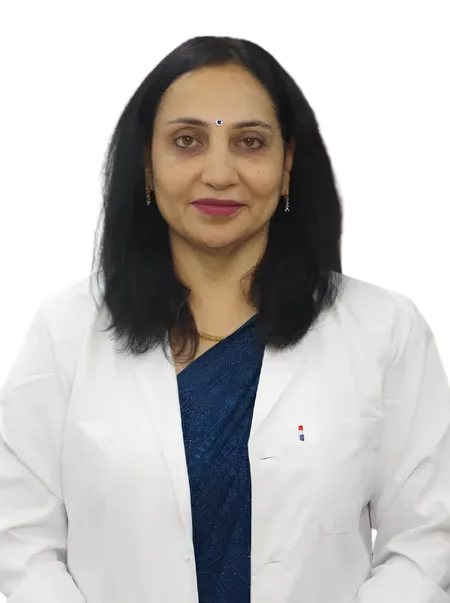
Dr. Ruchi Malhotra, MBBS, MS (Obstetrics & Gynaecology)
Gynaecologist & fertility specialist at Sehgal IVF Centre · Reg. No. 6111 · Last reviewed October 2026